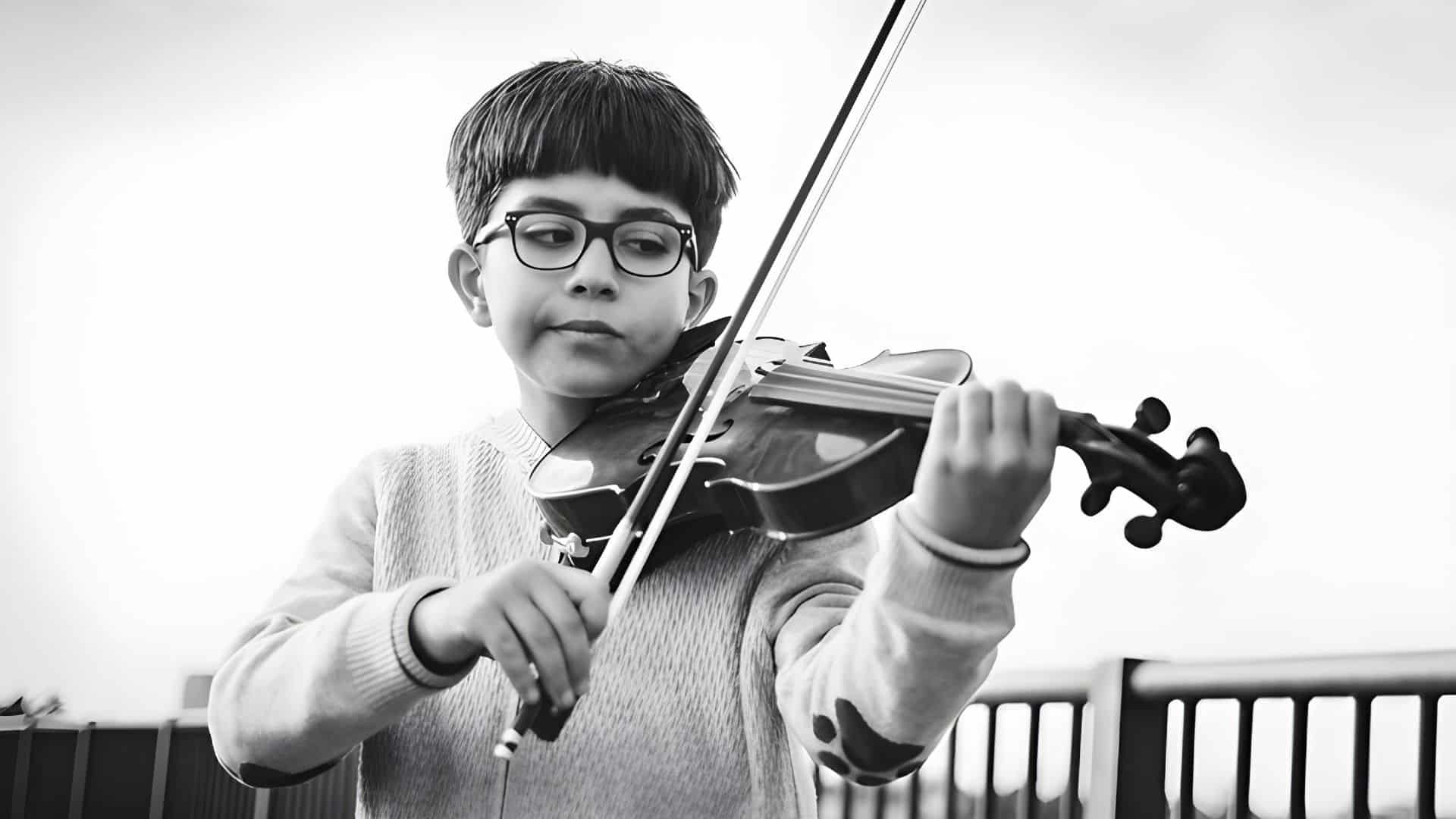
Part 1 of a five-part series on supporting your child’s music practice at home.
Why Practice Feels Hard (and Why That’s Normal)
If practice at your home sometimes feels like a tug-of-war, you are not alone. Every musician—child or adult—knows the contrast: some days the instrument feels like a trusted friend, and other days it feels like a mountain. One moment your child is happily playing through a favorite piece; the next, they’re staring at the music stand as if it personally offended them.
This doesn’t mean anything is going wrong. In fact, these fluctuations are signs that real learning is taking place.
Learning Doesn’t Move in a Straight Line
We often imagine progress as smooth and upward. But real skill-building looks more like a staircase: flat stretches, then small jumps, then more flat stretches.
Those flat stretches are where practice can feel repetitive or slow. Yet beneath the surface, the brain is strengthening pathways—coordinating fingers and bow, refining pitch and tone, building automaticity. These quiet, unglamorous days are as essential as the exciting breakthroughs.
Dr. Suzuki saw this clearly. Children learn language through countless imperfect attempts before they ever speak clearly. Music develops the same way: step by patient step.
“Hard” Is Not a Warning Sign—It’s the Growth Zone
When a child says, “This is hard,” we often worry. But in learning terms, “hard” usually means they are working just beyond what feels easy—exactly where growth happens.
When a child explores that zone:
- with support,
- in small steps,
- and without pressure,
they develop resilience and capacity. Hard moments are not obstacles to avoid; they are the terrain where progress becomes possible.
Daily Repetition: The Quiet Engine of Skill
Parents hear “practice every day,” but in Suzuki education, there’s a deeper truth behind it.
Human ability grows through consistent, repeated effort. Modern research echoes this: Suzuki-trained students show measurable improvements in posture, technique, and musical sensitivity—not through bursts of intensity, but through stable, structured repetition.
So if you’re helping your child work on the same bowing gesture or intonation spot for several days, it isn’t stagnation. It’s the foundation of fluency.
Why Practice Feels Emotional
If music were purely physical, practicing would be simple. But it’s emotional work too. Children often face feelings like:
- “What if I can’t do this?”
- “What if I disappoint someone?”
- “What if I mess up again?”
Children show their biggest feelings with the people they trust most—their parents. This doesn’t mean anything has gone wrong. It means your child feels safe enough to be real.
Your Role: Making Effort Feel Safe
In Suzuki’s vision, parents are partners, not enforcers. Your role isn’t to eliminate difficulty—it’s to help your child feel supported through difficulty.
That might look like:
- taking breaks when emotions rise,
- breaking tasks into tiny steps,
- using soft language (“That was a funny surprise—let’s try again”),
- noticing effort (“You stayed with that even when it felt tricky”).
Your steady presence tells your child:
“Struggle is normal. You don’t have to be perfect to be loved.”
Rethinking a “Good” Practice
A good practice is not defined by everything going perfectly. It might be:
- the day they listen deeply,
- the day they recover from a mistake more easily,
- the day they show patience with themselves,
- the day they stay with something a few moments longer.
These are the qualities Suzuki believed music education could nurture: perseverance, attention, courage, and kindness toward oneself.
A Gentle Truth
If practice at your home feels bumpy, emotional, repetitive, or slow, it does not mean:
- your child is behind,
- you are doing something wrong,
- something is broken.
It means you are walking through the real landscape of learning.
Each repetition, each tiny step, each hard moment met with compassion is forming not only musical skill, but the heart behind it.
That’s why practice feels hard. And that’s exactly why it matters.
Next in Part 2, we’ll look at what children actually remember from these moments—and how the daily bond you build in practice becomes one of the most powerful gifts of their musical upbringing.